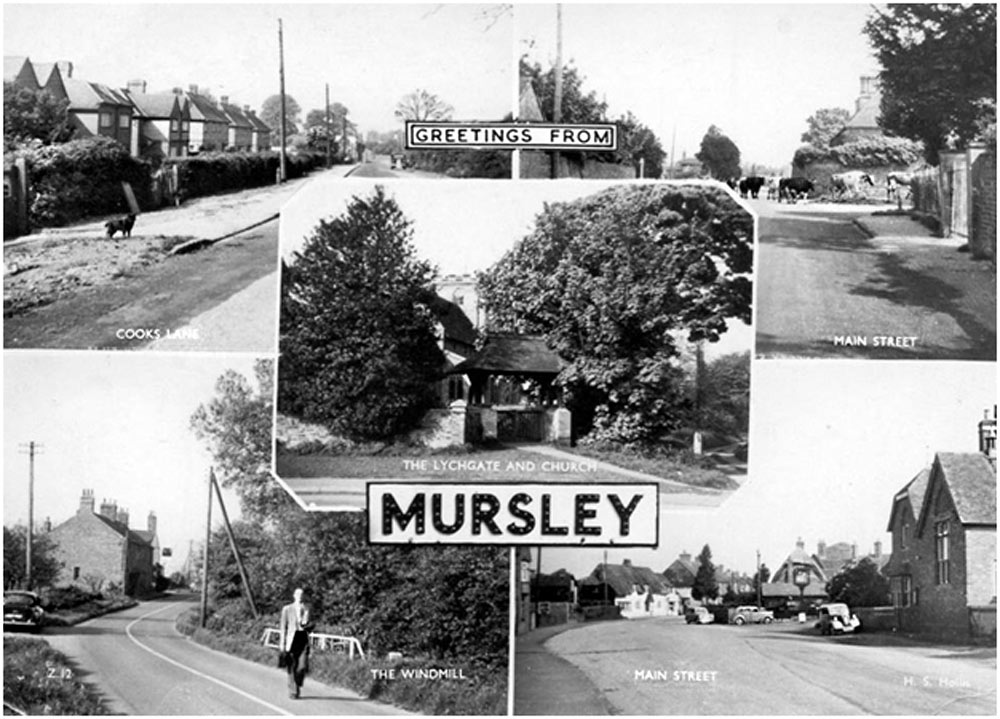
Opposite the church is Manor House Farm. The core of the farmhouse dates from 16th century, it has unusual chimneys. The farm was tenanted, it was sold for development by Buckinghamshire County Council in 2001 and is now Manor Close. Initials can be seen carved into the brickwork of the wall curving round into Cooks Lane.
 Chase House on the corner of Cooks Lane was originally flat roofed. It was known as Groom’s Folly, as it was assumed Joseph Groom the owner had run out of money and couldn’t afford a pitched roof. He was a Zoological wireworker. Finished pieces were taken down to London from Mursley in a pony and trap. With surplus pieces of wire Mr Groom made the porch and fence. Later residents included Mr Mrs Bozman, the retired School headmaster and his wife. It is now known as Chase House because a fox, pursued by hounds, went through the dining room window; the hounds killed the beast in Mr Bozman’s study.

Photo: M Taylor
Old Timbers, Cooks Lane is a C17th timber framed building with brick infill. In living memory, it was a bakery. WJ Roads, a photographer responsible for recording many of the early photographs of Mursley, lived here. Will’s daughter, Margaret, recalled the workshop at the end of the house; if her brothers broke a windowpane, they would scrape the emulsion off one of the photographic plates belonging to their father to re-glaze the window.

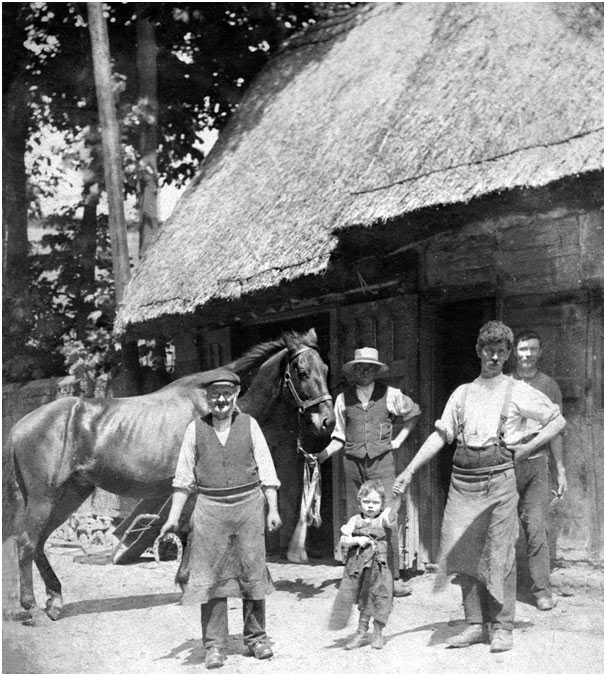
The Forge was run by the Ward family – Photo: J & V Ward
The Forge was run by the Ward family. During army manoeuvres in World War I the troops passed by and would stop outside to have their horses’ shoes checked. Horses waiting to be shod were tied up on the opposite side of the road on the Rectory wall. One old tie iron can still be seen there today. The annex which was the forge was rebuilt in 2019.
Below the Rectory garden is a new graveyard. Near this is a piece of ground, known locally as ‘The Pits’, named Homestead Moat. It is a Scheduled Ancient Monument, probably a medieval moat, now dry and under pasture. There was a windmill on the Swanbourne Road near the former inn of the same name. The mill was pulled down towards the end of the C19th.
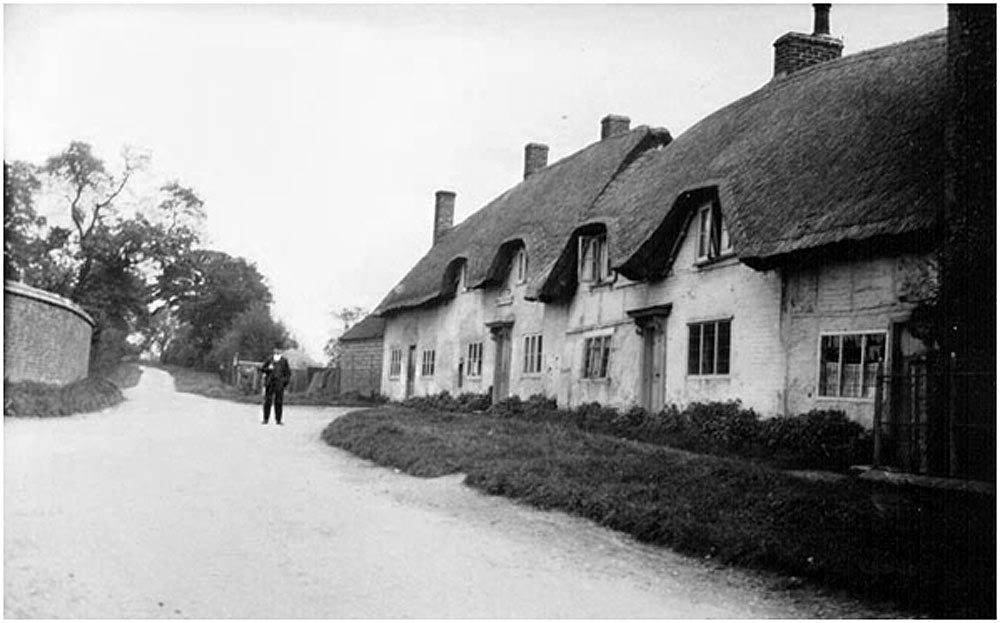
Spring Cottage, previously known as ‘Bubble Ouse’ because of the numerous springs, which feed the Ouse, is perhaps one of the oldest thatched cottages in the village. Its origins are said to date to 1523 although it bears the date of 1693.
Timber and brick Cedars Farm was once faced in pebble dashing. In early 1960’s the cladding was crumbling on the front of the house so builders were asked to remedy it – they found evidence of the beams and brickwork so cladding was removed from most of the house – resulting in it becoming a Grade 2 listed building. Evidence of the pebble dashing can still to be seen on the side wall today.
John Wright and Fred North were butchers in London. They frequently came to the area to purchase good quality fatstock that would be despatched by rail from Swanbourne and Winslow. Fred North purchased Spring Cottage, John Wright bought the fields on Pease Hill, which were allotments and built a five bedroomed house to accommodate him in retirement. He came from Richmond, London hence the name Richmond Lodge. A two-storey wing was added to the house, it became a seventeen-room nursing and maternity home run by his daughter Miss Alice Wright and Miss Page. It reverted back to being a private residence in the early fifties when the hospital wing was closed and converted into flats.
Travelling towards Little Horwood from the Whaddon Road junction is Beecham’s Row, the left-hand side of Station Road, 12 cottages built by Thomas Beecham for his employees.
Tweedale Close houses were built in 1993 on ground that was originally allotments; the estate was named after a Mr Tweedale, who lived at Spring Grove Farm, vacating it in 1938.
Mursley has an exceptionally fine Sports Ground of about four and a half acres. It has a Pavilion and part of it is a children’s playground. An annual feature of village life is the Coronation Sports Day held on the first Saturday in June on the Sports Ground. This was instituted at the Coronation of Elizabeth II in 1953. A surplus of funds raised for Coronation festivities was used to buy two silver cups, one for boys and one for girls. These are competed for annually, on a points basis, the winners ‘holding the cups’ for the following year and receiving miniature replicas. Stalls and sideshows at the Sports provide the funds for the next year’s event, so the event can go on indefinitely.




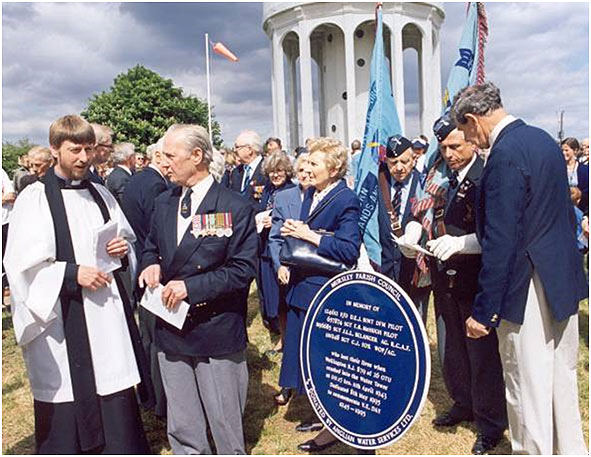
 A major renovation of the tower was carried out in 1968 and this removed all scars from the wartime crash, which although dramatic, had caused no serious structural damage.